Posts

Showing posts with the label mechanics

Diagetic Bingo

Image
 I was thinking about diagetic advancement recently and I want a more structured format for it. So I came up with bingo. This gives players and the GM a chance to work together to make diagetic progression.   The idea is this. At the start of the campaign, the GM tells everyone the elevator pitch of the campaign. Then, create a N x N (where N is the number of players including the GM) grid. This grid outlines the kind of growth the group wants to see. In alphabetical order, each player (including the GM) says a word that ties to the campaign pitch. Once every player has submitted one word each, repeat this process until the grid is full.    Here's an example I made for a campaign I plan to run.   Now that you have this grid, the GM uses it for inspiration for NPCs, items or places that give abilities based on the words provided. Once a diagetic ability is given, the word is removed from the grid. During downtime or at the end of a major adventure, players can ad...

Give your players Guns

Image
There is a game design phrase I heard a while ago called "The Myth of the Gun and the Myth of the Sword can't coexist". The Myth of the Sword is your power comes from you. The power you have is intrinsic to you. For example, Hulk from the MCU. I want to focus on the Myth of the Gun, where the items you carry is where you get your strength. An example would be Iron Man from the MCU. If the item breaks, you lose the power. Oftentimes monster hit all parts of the character sheet, from rust monsters attacking your equipment to ghouls taking your levels. Here is where the Myth of the gun shines as your players have to come up with creative solutions to be able to use their Guns.   This ties nicely into a old OSR tenet, "The answer is not on your character sheet". This isn't perfect as there is one part of the character sheet that you should look at and that's equipment. When I play dungeon crawlers and the situation starts to become more and more dire, the...

Dungeon Pope and Other Jobs

Image
I was thinking recently about how games struggle with "Why are we Dungeoning? Are we even Dragoning?". Often times the reason to go down there is there's treasure or someone needs "Heroic warriors to clear out the savage barbarians". These aren't great as one is very colonialist which isn't morally good. Gold is fine but at higher level gold starts to have less meaning as you need thousands of gp to level up. Furthermore, I find that player want to pursue their own goals once they are higher level once they better slot into the setting.  The Goal with a Dungeon job is to find a way to integrate the players into the setting faster and gives better for motivation. Below are 2 examples of a Job. What makes a Job is this: The Job must have a goal that is relevant to the setting and it has to take multiple sessions.  The job results in a level up or foreground growth if you don't use levels.  People react to your Job. Some despise you, Some love you and m...

Class slots

Image
I am Currently creating a ruleset for my next game when ever it is. I was also revisiting the game Backpack Hero developed by Jaspel. In it, you play as a mouse with a magic backpack. Inside this backpack you store items that have abilities that help you throughout the run. All your magic, healing items, armour and weapons have to fit in (at first) a 3x3 grid. I found it quite interesting but I realised I could apply this to TTRPGs. See, I don't like classes as they feel too constrained to their archetype. If my fighter wants to cast a spell then tough luck. I put this idea on the backburner until I bought the starter set for Warhammer 40k: Wrath and Glory. Now, they use a point buy system for every thing and now I present a basic prototype.  The Prototype   The blue item is a feature while the red is a different feature. Size not final   The two classes I plan to have are Steel and Spell. Steel can move features at a moment's notice to fit a new technique. For example, S...

Faction based character generation

Image
 Inspirations I read the Blades in the Dark SRD and thought about the idea of the group having a sheet because I am creating a hexcrawl and I felt that gear usage is more of a party decision than an individual decision. Like everyone cares how much rations the party has and who has what gear is also important so I decided to make something that plays with that idea. My favorite thing in video games is unlocking a new character after I beat a game like Shovel knight and Plague of Shadows. This gets close.  From Yacht Club Games Sample Group Type The [Faction name and group name] Reasons to adventure Day to day reason More difficult reason that is done once a month or so Large faction goal that is a once off event  Stat generation system for rolling a character in the faction along with maybe a passive advantage and disadvantage. List of items they can start with that they pick and choose  Armour or protective equipment  Weapon or offensive equipment  Equipme...

Choatic Casting

Image
Why?  Spells in a vancian casting system feel too rigid and don't feel connected to other wizards in the setting. I had a dream a few nights ago of an unusual setting. If I can remember more I can post it on here. The dream happened before I had a blog. The class that used this system was a mud prophet, an orc class. They were focused around the unpredictability of fate and how fate could effect their casting. I also wanted metamagic like the 5e sorcerer but wanted it to work in an OSR setting. Spellcasting When a Prophet casts a spell, they look at their cauldron to see it's state since the last casting. Every day, the spell's property changes. A celebrity casts magic missile? suddenly the darts do 1d8 damage per dart instead of 1d4. Magic missile is taken off the wizarding curriculum? It now takes a full round to cast, only shooting once it's finished. Every spell has three things defining it. Implicits are things that every spell has like duration, spell level and ra...

Do you NEED an economy?

Image
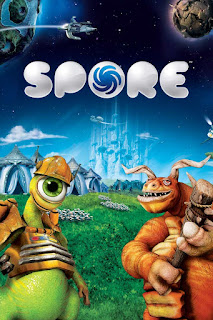
Spore and XP I am currently designing my heroic OSR game. One big touchstone for my heroic OSR game is Spore, a game developed by Maxis. In it, you gain DNA points to grow from a cell, to a creature, to a tribe, to a civilization and ending at galactic force. I intend to focus on the creature stage as you stop evolving after the creature stage.  You can gain DNA points from eating plant matter and other creatures to later, befriending and killing other species. I thought I could just replace gold with DNA and call it a day. That felt lazy and did some further thinking. Why do these creatures want treasure? They aren't even fully sentient. So I created a XP checklist inspired by games like Dungeon World and Vagabond. Since I don't use XP for gold, the only reason I had it was for shopping. Shopping is the bane of my existence in ttrpgs so I just decided than and there that there was no gold and shopping, instead treasure can be more ordinary items like rope and 10 ft poles.  ...

Time to throw my hat into the ring

Image
Heroic OSR All the talk recently about reducing lethality in OSR games got me thinking about "A Quick Primer For Old School Gaming". One of the Zen moments mentioned in the primer is Heroic, not Superheroic. I find a lot of OSR games focus on mud farmers growing over time to be monarchs and sorcerers. I personally don't like this as free time is becoming more and more scarce. I won't be able to run enough sessions to get players to the end goal of monarch, sorcerer or homeowner. I like ruling not rules, I like that problem solving outside the sheet is important, I like the avoidance of game balance but I don't want to play mud farmers all the time. This looks like a job for me.   From Land of The Blind A game that has what I am going for is FIST by Claymore. The only issue is it is more modern and I want to run fantasy. Break!! by Grey Wizard and Madrinan, from what reviews I have read, gets closer but it is unclear about how I am supposed to play the game. All ot...

Generational Play taken to a weird extreme

Image
How did we get here? I read up on the Pendragon ttrpg and I thought about having a legacy by playing your characters next of kin. I also found out about legacy games that change based on the events of previous games. I was bored one night and decided to combine these, finding as many resolution mechanics as I can and adding them to the possible ways that your next of kin will resolve dice. I asked my players and one of them said and I quote "No child of mine rolls a d100 for anything, we are a family with standards!" From findmypast.ie Generations  First you roll for siblings which varies by species but for humans they roll 1d6-1 for siblings. At this point, you choose a resolution mechanic like 1d20 roll under. This is what you roll to resolve checks.  Then roll 1d6 for each sibling and any children you have (be it born, adopted, built or otherwise). On a 1-3 on a d6 the person will use the same resolution mechanic as you. On a 4-6 they roll on the Master List.. I am current...